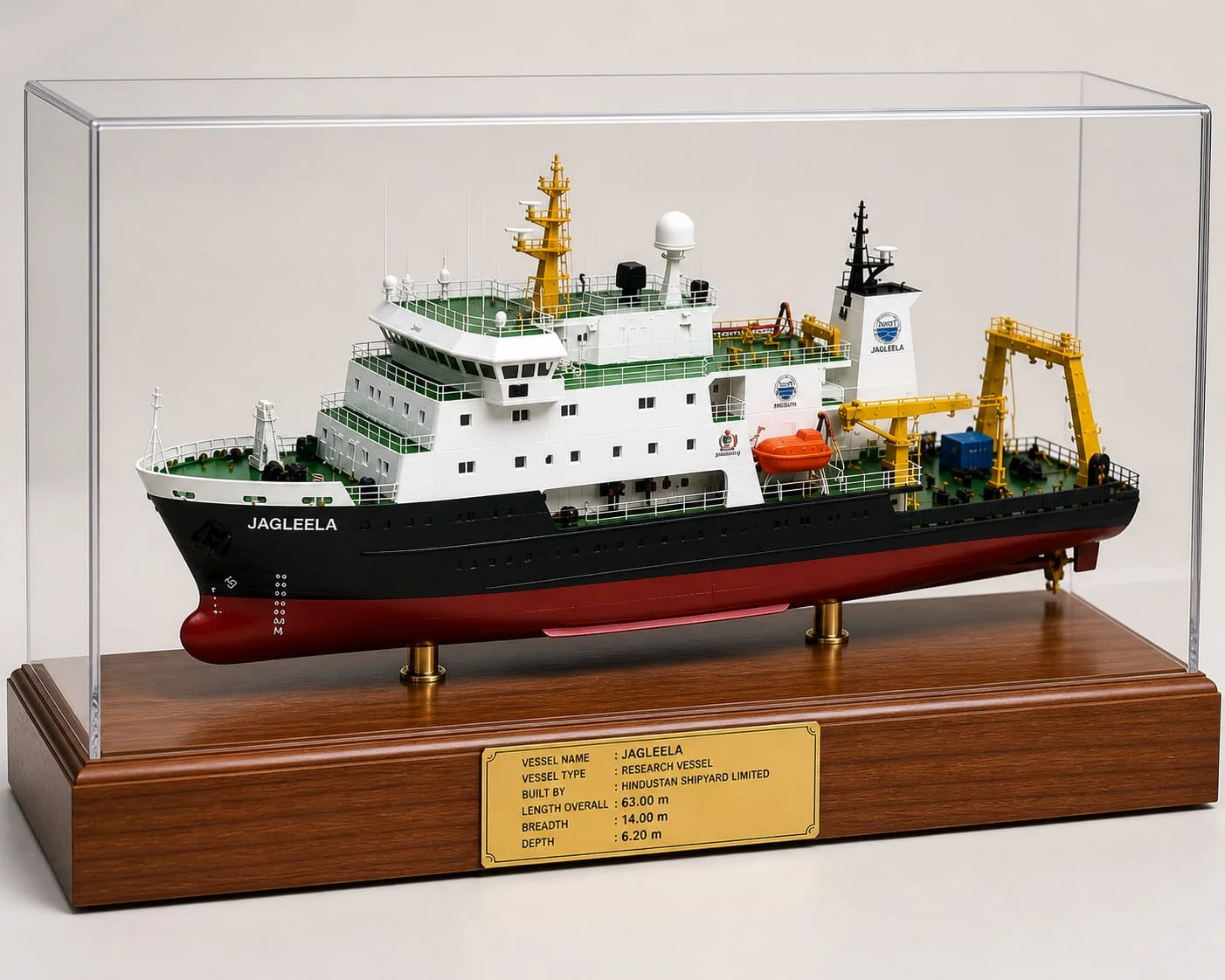
Offshore installations are among the most complex structures ever engineered, combining structural steelwork, process piping, drilling equipment, and living quarters into a single compact footprint. Explaining that complexity to a boardroom, a regulator, or a new hire is genuinely difficult from drawings alone, which is why an offshore platform model has become a standard tool across the energy sector.
Why the Oil and Gas Sector Relies on Physical Models
Offshore projects involve enormous capital commitments and long design-review cycles, often spanning multiple contractors and regulatory bodies. A physical model gives every stakeholder in that process a shared, unambiguous reference point, reducing the miscommunication that tends to creep in when different teams are working from different drawing revisions.
Investors and joint-venture partners evaluating a new field development also respond more confidently to a tangible representation of the proposed platform than to engineering schematics alone, particularly during early-stage funding presentations.
What an Accurate Build Needs to Capture
A convincing offshore platform model needs to represent the jacket or hull structure, topside modules, drilling derrick, helideck, and flare boom in correct proportion to one another, since these elements define how the platform actually functions. Process piping and major equipment skids are often included at a simplified level of detail, enough to convey layout without overwhelming the build with unnecessary complexity.
For models intended for safety training or emergency response planning, evacuation routes, muster points, and lifeboat stations are usually highlighted clearly, since the model doubles as an orientation tool for personnel who have never physically been on the platform.
Materials Suited to Offshore Detailing
Structural steelwork is commonly represented using laser-cut metal or acrylic framing, which holds fine lattice and truss detailing far better than moulded plastic alternatives. Topside modules and equipment are often 3D printed for precision, then hand-painted to match real-world colour coding used across piping and safety systems.
Because offshore structures are exposed to harsh marine conditions in reality, clients sometimes request weathered or corrosion-effect finishing on the model itself, which adds a layer of realism appreciated by engineers reviewing structural condition scenarios.
Where These Models Get Used
Beyond boardroom presentations, an offshore platform model frequently appears at industry exhibitions, where operators showcase active or planned installations to potential partners and government stakeholders. Engineering teams also keep scaled references on hand during design review meetings, using them to walk through proposed modifications before committing changes to the actual structure.
Training centres for offshore personnel increasingly use physical models alongside simulators, giving new recruits a spatial understanding of platform layout that complements the digital training tools already in use across the industry.
Working With an Experienced Studio
Given the technical complexity involved, it is worth confirming that a prospective studio has handled offshore or marine structural builds before taking on this kind of project. Ask how they source structural drawings, how confidentiality is maintained around unreleased field development plans, and what level of piping and equipment detail they typically include at each project stage.
It is also worth asking whether the studio has experience building models that need to be updated as a field development progresses through multiple phases, since offshore projects frequently evolve significantly between initial concept and final sanction.
Supporting Regulatory and Safety Reviews
Regulatory bodies reviewing offshore installations sometimes request physical models to support safety case documentation, particularly for complex or novel platform designs where written descriptions alone make it difficult to assess structural relationships. Having an accurate model on hand can shorten review cycles by giving assessors a faster way to understand the proposed layout.
Internal safety teams also use models during hazard identification workshops, walking through potential incident scenarios — a gas leak near the living quarters, for example — using the physical layout as a reference point for the discussion.
Budgeting for a Complex Structural Build
Cost for a build of this kind is driven mainly by structural complexity, the amount of topside equipment represented, and whether the build needs to support future modular updates as the project develops. Clients often find it more cost-effective to build the platform structure at a higher level of detail while simplifying repetitive elements such as standard piping runs, rather than pursuing uniform maximum detail across the entire model.
Requesting a phased quote — structure first, topside detailing second, finishing and basing last — makes it easier to manage budget approval in organisations where capital spending requires multiple sign-offs.
A Tool That Outlives the Presentation
A well-built model ends up serving the project long after the initial presentation, functioning as a coordination tool, a training aid, and often the centrepiece of the operator’s exhibition stand for years afterward.
Coordinating Across Multiple Engineering Disciplines
Offshore platform design pulls together structural engineers, process engineers, pipeline specialists, and drilling contractors, each working on interconnected but distinct parts of the same installation. A shared physical model gives every discipline a common reference during coordination meetings, reducing the kind of miscommunication that can occur when structural and process teams are reviewing separate sets of drawings that describe the same physical space.
This becomes especially valuable during front-end engineering design reviews, where early decisions about module placement and structural support have long-term cost implications if they need to be revisited later in the project.
Representing Marine and Structural Elements Together
Because an offshore platform sits at the intersection of structural and marine engineering, studios building these models need familiarity with both disciplines — accurate jacket and hull representation on one side, and correct topside process and safety layout on the other. This combined expertise is part of why offshore platform builds are often handled by studios with a broader marine model making background rather than a purely structural or purely architectural model shop.
Planning Ahead for a Successful Commission
Operators considering a new build should start the conversation with their chosen studio well before the intended presentation date, sharing available structural drawings early even if some details are still being finalised. This gives the fabrication team room to plan the build in logical stages and flag any data gaps early, rather than discovering them midway through a compressed schedule.