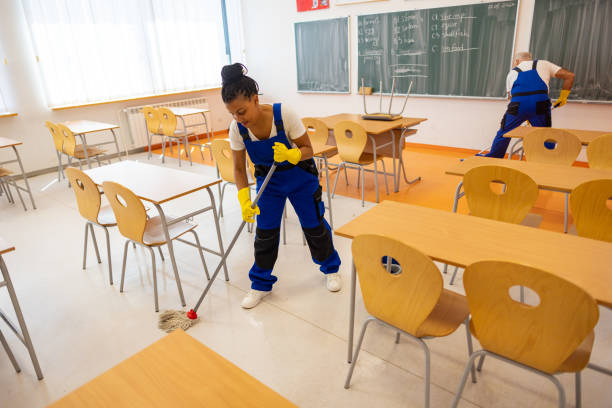
Anyone who has spent time inside a primary school by 3pm on a Friday knows the reality: sticky classroom floors, chalk dust on window ledges, and a staffroom kitchen that’s seen better days. Multiply that by a few hundred students moving through corridors, canteens, and playgrounds every single day, and you start to understand why school cleaning is a far bigger job than most parents ever consider.
Principals and facility managers across Sydney are under constant pressure to keep buildings presentable, hygienic, and safe, all while working within tight departmental budgets. It’s a balancing act, and the schools that get it right tend to have one thing in common: School Cleaning Sydney
Why Schools Are Different From Other Buildings
Offices empty out on weekends. Retail stores have controlled foot traffic. Schools, on the other hand, are packed with hundreds of children moving between rooms, sharing surfaces, eating in communal spaces, and touching everything from door handles to playground equipment. It’s an environment practically designed to spread germs if hygiene isn’t taken seriously.
Add to that the reality of school life: spilled paint in the art room, mud tracked in from the oval, chewing gum under desks, and the inevitable accidents that happen with younger students. A cleaning routine built for a corporate office simply won’t hold up in a primary or secondary school setting.
Illness Control Starts With the Basics
One of the biggest, and often underappreciated, benefits of proper cleaning in schools is a reduction in the spread of common illnesses. Cold and flu season hits schools hard every year, partly because children aren’t always great at hand hygiene, and partly because high-touch surfaces like door handles, light switches, and shared stationery rarely get the attention they need without a dedicated system in place.
Disinfecting these touchpoints regularly, not just mopping floors, is one of the most effective ways schools can reduce absenteeism. Fewer sick days for students also means fewer disruptions for teachers trying to keep classes on track with the curriculum.
Classrooms, Canteens, and Everything In Between
A thorough school cleaning approach treats each area of the campus differently. Classrooms need daily attention to desks, floors, and shared learning materials. Canteens and kitchens fall under stricter food safety requirements and need commercial-grade sanitising practices. Toilets and change rooms, often the least glamorous part of the job, are also the areas parents and staff notice fastest if standards slip.
Then there are the spaces that only need periodic but thorough attention, like library carpets, hall floors used for assemblies, and staff areas where confidential paperwork means access needs to be handled carefully and professionally.
Working Around the School Day
One of the trickiest parts of school cleaning is timing. Unlike an office building, schools can’t simply be locked up and cleaned whenever it’s convenient. Most work happens early in the morning before students arrive or in the evening after the last bell, with school holidays used for deeper, more disruptive tasks like carpet steam cleaning or floor stripping and resealing.
This is exactly the kind of scheduling challenge that specialist School Cleaning Sydney providers are set up to handle. Teams experienced in education settings understand term dates, understand that a gym hall might be needed for an assembly at 9am sharp, and plan their work around the rhythm of a school calendar rather than a standard nine-to-five.
Compliance and Peace of Mind for Parents
Schools also carry a level of public trust that other buildings don’t. Parents expect that when they drop their child off, the environment is safe, hygienic, and well maintained. A school that visibly struggles with cleanliness, whether it’s overflowing bins or grubby bathrooms, quickly becomes a talking point in the parent community, and not the kind any principal wants attached to their school’s reputation.
Beyond reputation, there are genuine compliance obligations around hygiene, particularly in canteens and food preparation areas, that schools are expected to meet as a matter of course. Having a professional team managing this reduces the administrative burden on already stretched school staff.
Building a Long-Term Cleaning Partnership
The schools that manage this well tend to treat cleaning as an ongoing partnership rather than a service they book reactively when something goes wrong. Regular communication between facility managers and the cleaning team, clear checklists for different areas of the campus, and periodic reviews of what’s working all contribute to a campus that stays consistently presentable throughout the school year, not just during open days and school tours.
Final Thoughts
A clean school isn’t just about appearances. It plays a real role in reducing illness, supporting a positive learning environment, and reassuring parents that their children are in good hands. For Sydney schools looking to tighten up their cleaning standards, partnering with a team that genuinely understands the demands of an education setting makes the difference between a campus that just gets by and one that consistently sets a high standard.